Dai Ailian
Introduction
Dai Ailian (1916-2006), also known as Ailien Tai, was a renowned Chinese ballerina and dance educator, often celebrated as a pivotal figure in the evolution of Chinese dance.
Born in Trinidad in 1916, Dai Ailian devoted her life to the art form, earning her the title of "mother of Chinese dance". Her legacy is intertwined with the development of major dance institutions in China, including her role as the first president of both the Beijing Dance Academy and the National Ballet of China. Throughout her career, she made significant contributions to the promotion of dance education and the integration of Western ballet with traditional Chinese dance.
Early Life
Dai Ailian was born in 1916 to a Chinese family in Trinidad. Her early exposure to dance began in her childhood, though details of her upbringing in Trinidad remain largely undocumented. The cultural milieu of her early environment likely planted the initial seeds of her lifelong passion for dance. It was during these formative years that Dai developed an affinity for ballet, a form to which she would later dedicate much of her professional life.
Venturing to London, Dai immersed herself in the study of ballet, a decision that would shape her artistic trajectory profoundly. This period of intense training in a Western context provided her with a foundation that she would eventually adapt and mold to suit Chinese sensibilities. Dai's early life was marked by a blend of cultural influences that would later manifest in her unique approach to dance, characterized by a seamless fusion of Western and Eastern styles.
After completing her training in London, Dai returned to China in 1940. This marked the beginning of her mission to integrate her Western ballet training with Chinese cultural elements. Her approach was innovative for the time, as she sought to create a new genre of dance that was uniquely Chinese yet informed by global techniques. This educational background laid the groundwork for her subsequent roles as an educator and a pioneer in Chinese dance.
Career
Upon her return to China, Dai Ailian quickly established herself as a prominent figure in the dance community. Her early career was characterized by her efforts to teach and disseminate Western ballet techniques while infusing them with traditional Chinese dance elements. This synthesis of styles was reflective of Dai's vision to create a distinctive Chinese ballet that respected both its Western roots and its Eastern context.
Dai's influence was instrumental in the formation of major Chinese dance institutions. In 1954, she was appointed as the first president of the Beijing Dance Academy, the country's first institute of dance. Her appointment was a testament to her expertise and vision, and under her leadership, the academy became a revered cradle for dancers in China. Her tenure saw the cultivation of numerous accomplished dancers, choreographers and educators who went on to contribute significantly to the field of dance in China and beyond.
One of her notable contributions was the choreography of "Lotus Dance", a classic piece that exemplified her skill in blending Western ballet techniques with traditional Chinese dance movements. Her work extended beyond choreography to include the nurturing of talent, as she was deeply involved in the training and mentoring of young dancers. Her influence is credited with laying the foundation for the flourishing of Chinese dance education.
Dai Ailian's impact extended beyond China's borders, as she became an ambassador of Chinese dance on the international stage. Her efforts to introduce Chinese ballet to global audiences were met with acclaim, and she played a significant role in cultural exchanges that enriched the understanding and appreciation of Chinese dance worldwide.
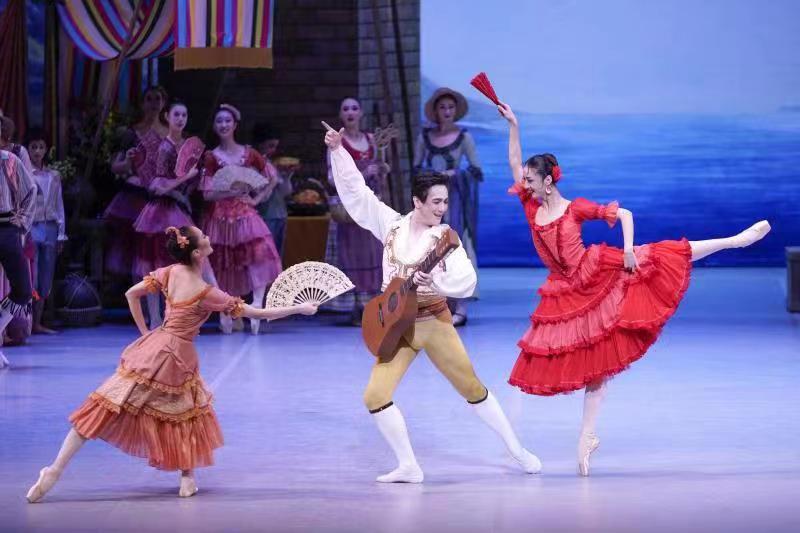
Her international influence is also marked by her collaboration with renowned choreographers and dance companies. For instance, her invitation to the legendary Rudolf Nureyev to Beijing in 1985 led to the staging of "Don Quixote", a production that highlighted the cross-cultural collaboration between the National Ballet of China and Western ballet traditions. Through such initiatives, Dai Ailian helped elevate Chinese ballet to global prominence, fostering an intercultural dialogue that continues to inspire dancers and choreographers today.
Legacy and Honors
Dai Ailian's legacy in the world of dance is enduring and multifaceted. She is celebrated not only for her artistic and educational contributions but also for her role in bridging cultural divides through dance. Her pioneering efforts in shaping dance education in China have left an indelible mark, influencing generations of dancers and choreographers.
In recognition of her immense contributions, Dai Ailian received numerous honors throughout her lifetime. Her legacy is preserved in the institutions she helped build, the dance works she choreographed, and the countless students she mentored. Her influence is felt in the continued growth and success of the Beijing Dance Academy and the National Ballet of China, both of which stand as testaments to her vision and dedication to the art of dance.








